
Wired Networks That Eliminate Dead Zones and Dropped Devices
Data network installation in Evansville for homes and small businesses operating without structured cabling or reliable wired connections
A single wireless router placed in a central room was the standard network setup for most Evansville homes and small businesses before remote work, streaming, and device-dense households made that architecture genuinely inadequate. JAK Electric installs data networks for homes and businesses across Evansville, running Cat6 cable to each device location, terminating it at a central hub or panel, and testing every connection for speed and signal quality before handing the system over. The result is a network where the devices that need consistent throughput—workstations, video conferencing setups, access points, smart televisions—have a dedicated wired path rather than competing over shared wireless bandwidth.
Installation begins with an assessment of your space and device locations, followed by cable routing through walls or conduit to a central termination point. Each jack is terminated to TIA standards, patched through a managed switch where the device count or traffic type requires it, and tested for both speed and signal integrity before labeling. Nothing in the system is left as a best-guess connection—every run is verified before it is considered complete.
Set up a site visit with JAK Electric to map your device locations and determine the most efficient cable routes for your building layout.
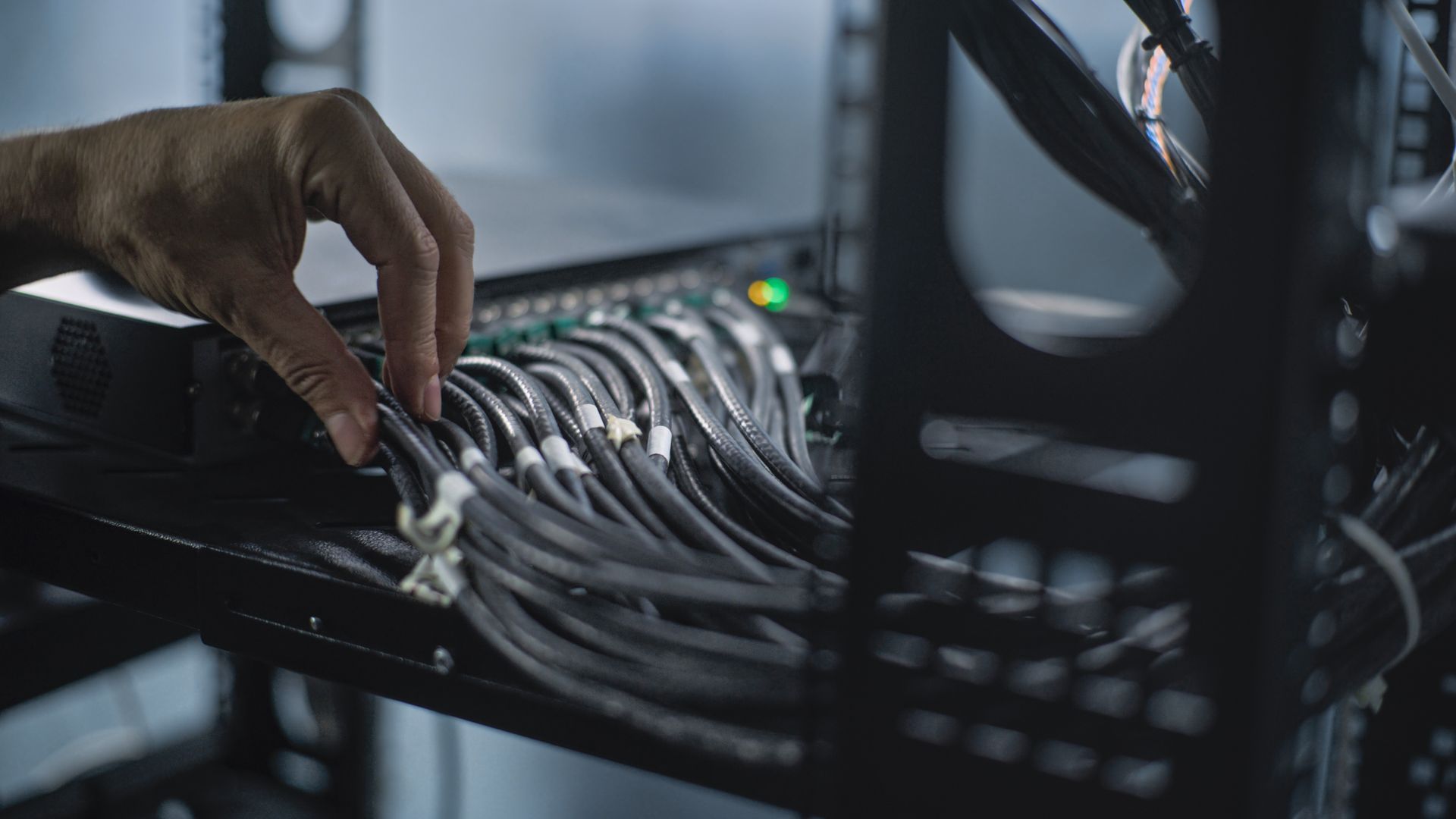
The Difference Between Structured Cabling and a Patched-Together Setup
A data network that was assembled incrementally—a switch here, a patch cable there, a powerline adapter to bridge a gap—behaves unpredictably as device count grows. Each added segment introduces a potential bottleneck or failure point that is difficult to isolate when something slows down or drops. A structured installation runs discrete cable paths from each device location to a single termination point, which means faults are identifiable by port, traffic can be managed at the switch level, and expanding the network later means adding a run to the panel rather than trying to figure out where the current tangle of equipment is physically located.
After JAK Electric completes a data network installation, workstations hold consistent connection speeds regardless of how many other devices are active on the network, video calls stay stable without the buffering that accompanies shared wireless congestion, and the entire system is labeled at both ends of every run so that any future change—adding a port, moving a device, upgrading a switch—can be done without pulling cable to trace what is already in the walls.
The scope of a data network installation varies depending on the number of drops needed, whether a managed switch is part of the design, and what the building's wall construction allows in terms of routing. JAK Electric assesses those factors during the initial visit and defines the scope clearly before work begins, so there are no decisions made mid-job that change what the final system looks like.
Questions Before Starting Your Project
These questions address how data network installation works in practice—what is included in the work, how decisions about routing and equipment are made, and what the finished system looks like once testing is complete.
What standard is used when terminating Cat6 jacks, and why does it matter?
Each jack is terminated to TIA-568B standard, which specifies the wire pair arrangement at the connector—using a non-standard or inconsistent termination across a run degrades throughput and causes the cable to underperform its rated speed regardless of the equipment connected to it.
How is the central termination point for the network determined?
The patch panel or switch location is chosen based on where cable runs from all device locations can converge with manageable lengths, where the internet service enters the building, and whether the space has adequate ventilation for the equipment—a poorly located hub creates both physical access problems and heat issues over time.
When is a managed switch necessary rather than an unmanaged one?
A managed switch is appropriate when traffic between specific devices needs to be prioritized, when the network is segmenting devices into separate groups for security or performance reasons, or when the port count and device types require monitoring—unmanaged switches work for simpler setups where all devices share equal access.
How does the construction era of an Evansville building affect how data cable is routed?
Older commercial buildings and homes with plaster walls or balloon framing have fewer accessible wall cavities and more restrictive top plates, which affects both the time required to route cable and whether surface conduit is a better option than in-wall runs for certain segments of the installation.
What does the testing process confirm before a data network installation is considered complete?
Each run is tested for continuity, wire map accuracy (confirming correct termination at both ends), and signal performance at the cable's rated speed—a run that passes continuity but fails speed testing typically indicates a wiring error at one of the jacks that needs to be corrected before the port is put into use.
JAK Electric also
installs data networks in Princeton, Newburgh, Henderson, Mount Vernon, and Boonville. To discuss your building's layout and device requirements, call JAK Electric at (812) 647-1480 and describe what your current network setup is not doing well enough.