
Panel Replacement Built Around Actual Load Requirements
Electrical panel replacement in Evansville for homes with undersized, rusted, or repeatedly tripping breaker boxes
Much of Evansville's residential housing was built during eras when a 60-amp or 100-amp service panel was considered adequate, sized for lighting and a handful of small appliances rather than central air conditioning, electric dryers, home office equipment, and the circuit density that modern households require. JAK Electric replaces breaker boxes for homes across Evansville, installing panels sized to the home's actual current load and built with the correct breaker spacing and grounding that code now requires. Every panel replacement is handled personally by JAK, who has over 20 years in the electrical trade and ran electrical projects for a larger commercial firm for six to eight years before operating independently—a background that shapes how the work is planned and verified.
The replacement process begins with the main breaker shutoff and removal of the existing panel, at which point the service entrance is inspected for damage, water intrusion, or deterioration that would affect the new installation. The new panel is selected for the home's verified load requirements—not a generic size—and installed with proper grounding, correct breaker spacing to prevent heat buildup, and circuit organization that makes future work straightforward. Rust and moisture damage, which are common in older Evansville homes where panels were installed in basements or garages without adequate weatherproofing, are addressed at the service entrance level before the new box is mounted.
Contact JAK Electric to arrange a panel evaluation and get a clear assessment of whether your current box is sized and grounded correctly for your home's load.
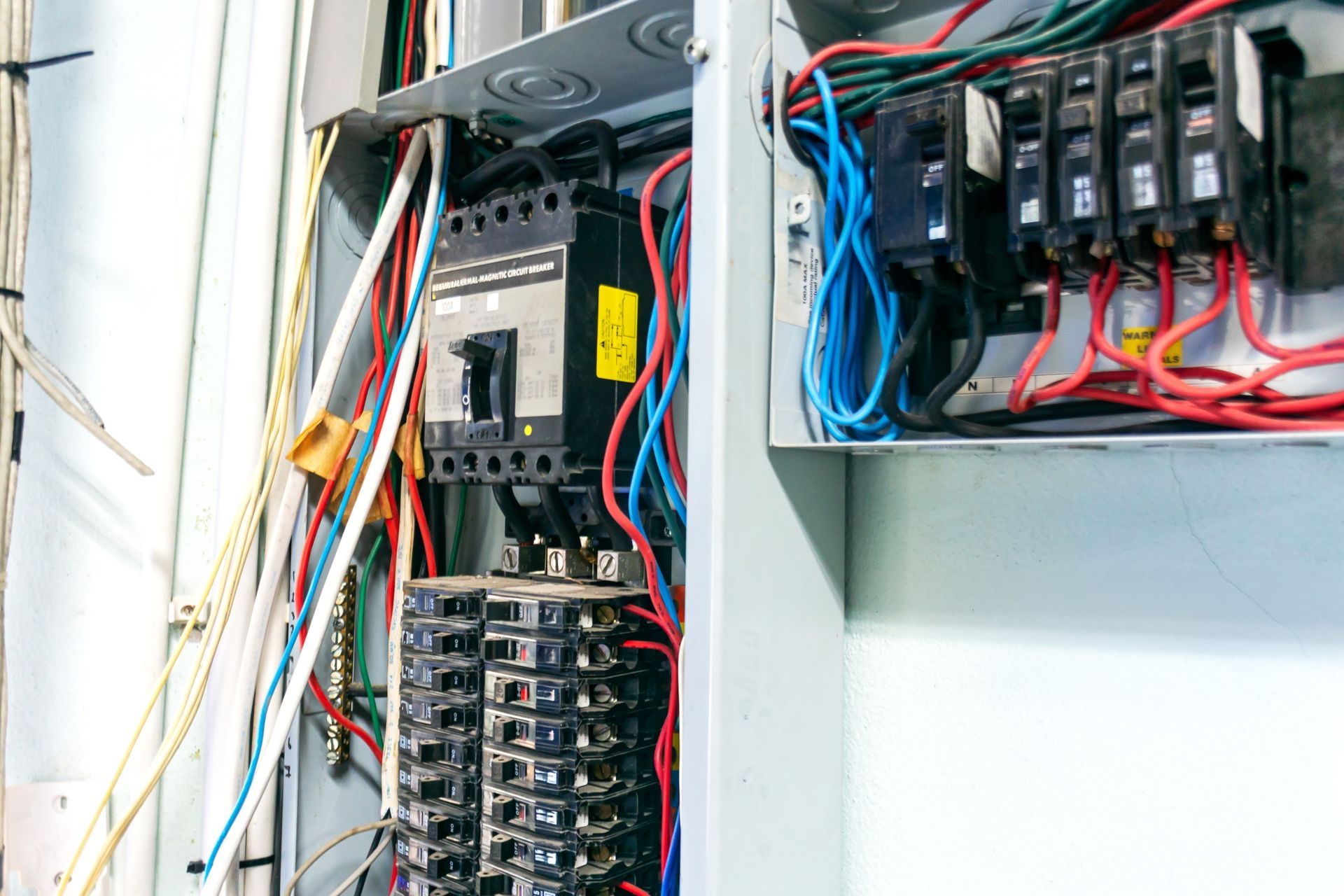
What Proper Panel Replacement Actually Requires
A panel swap is not simply swapping one box for another. The service entrance conductors—the wires bringing power from the utility connection into the panel—must be inspected and confirmed to be in adequate condition before a new panel is connected to them. If those conductors show insulation cracking or inadequate sizing for the new panel's amperage, that has to be addressed as part of the project, not treated as a separate issue to defer. JAK Electric's process includes that evaluation at the outset, so the completed installation is code-compliant at every connection point, not just at the new panel face.
After a panel replacement is complete, the most immediate observable change is the elimination of nuisance breaker trips that occurred because the old panel's capacity did not match the home's electrical demand. Circuits that previously could not support simultaneous appliance loads now operate without interruption, and the breaker directory—properly labeled during installation—makes it clear which breaker controls which circuit throughout the house. Panel replacement work at JAK Electric typically finishes within one day, and the new box is positioned for safe access and for the addition of circuits without compromising existing breaker spacing.
Homes where the existing panel shows double-tapped breakers—two circuits connected to a single breaker terminal—receive specific attention during the replacement, because that configuration is a code violation that indicates the old panel ran out of breaker slots and was improperly extended. The new installation eliminates double-tapping by providing the correct number of slots for the home's circuit count, with room for future additions without reverting to the same workaround.
Answers About How Panel Replacement Work Is Done
Panel replacement involves more decisions and site-specific variables than most homeowners expect, particularly in homes where the original installation dates back several decades.
How is the correct panel size determined for a specific home?
The electrician calculates the home's actual load by identifying all circuits, their amperage ratings, and the devices served, then selects a panel amperage that handles the current load with capacity for additions—200-amp service has become the standard for most modern households with air conditioning and large appliances.
What happens to the existing circuits when the old panel is removed?
Each circuit wire is labeled, disconnected from the old panel in sequence, and reconnected to the correctly rated breaker in the new panel; the sequence matters because it prevents circuits from being swapped or left unconnected, which would show up immediately during post-installation testing.
Why do some panels in Evansville homes show rust inside the box, and does that affect the replacement?
Rust inside the panel typically indicates moisture intrusion from a poorly sealed service entrance or inadequate ventilation, and that entry point must be identified and sealed as part of the replacement—installing a new panel without addressing the moisture source recreates the same problem within a few years.
What does grounding involve in a panel replacement, and why does it matter?
The new panel requires a grounding electrode conductor connected to a ground rod or the home's water pipe system; proper grounding limits voltage rise during a fault and is what allows breakers to trip correctly rather than allowing dangerous current to continue flowing through a failed circuit.
How do you verify the new panel is working correctly after installation?
Each circuit is tested for continuity and correct breaker assignment, the panel is loaded progressively to confirm breakers hold at rated amperage, and the service entrance connection is checked for torque at terminals—loose terminals are the most common cause of heat buildup and arcing at newly installed panels.
JAK Electric also performs panel replacements in Princeton, Newburgh, Henderson, Mount Vernon, and Boonville. Call JAK Electric at (812) 647-1480 to discuss your current panel's condition and what a properly sized replacement would involve for your specific home.