
Outlets and Switches Wired to Code From the Start
Outlet and switch installation in Evansville for homes with insufficient outlets, missing GFCI protection, or aging devices on older circuits
Adding an outlet or replacing a switch sounds like minor electrical work, but in an older home it often reveals conditions that require evaluation before the new device goes in. JAK Electric installs outlets and switches for homes across Evansville, handling the wiring, grounding, and circuit assessment that makes the installation safe rather than just functional. Owner-operator JAK personally manages every installation, with over 20 years in the trade, and that background means the work starts with the circuit—not just the device location—to confirm the existing wiring can carry the added load before the outlet is connected.
Older Evansville homes frequently have fewer outlets per room than current code requires, and the circuits feeding those outlets were sized for the appliances of earlier decades. When additional outlets are needed in a kitchen, bedroom, or finished basement, the process involves locating the nearest panel or existing circuit, running new wire to the outlet location through walls or accessible ceiling space, and confirming the circuit's amperage is appropriate for what the new outlet will serve. GFCI outlets in bathrooms, kitchens, garages, and exterior locations are installed per current code requirements, and all devices are tested for correct grounding before the job is considered complete.
Set up an on-site visit with JAK Electric to identify the best circuit source for new outlets and confirm whether the existing wiring in that area of your home can support the planned addition.
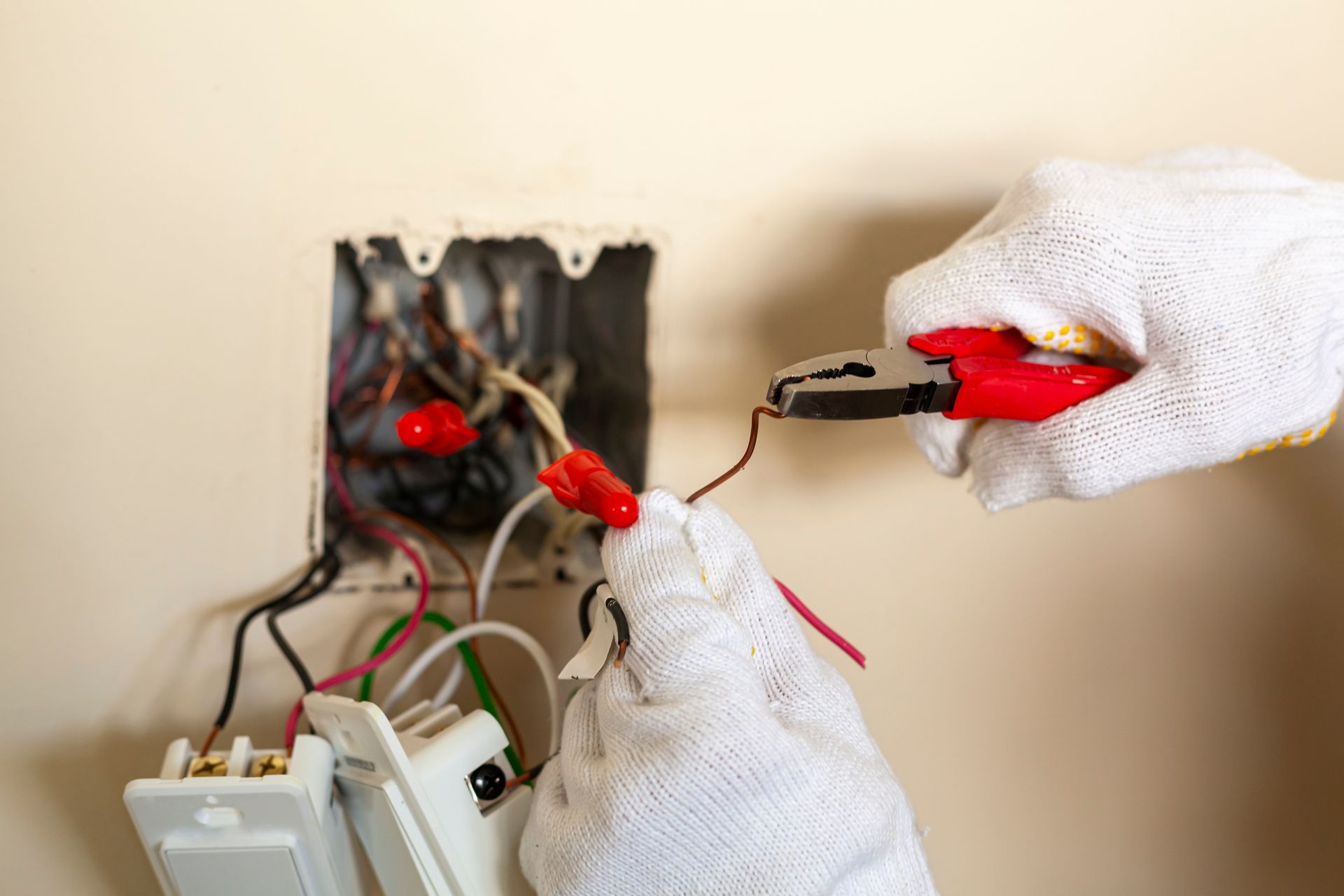
What Outlet and Switch Installation Actually Accomplishes
The installation sequence begins at the panel, not the outlet location. Before running wire to a new device, the circuit intended to serve it is tested for available capacity—a circuit already drawing close to its rated amperage cannot safely absorb additional outlets without risking nuisance trips or, more seriously, overheating at the breaker. If the nearest circuit is already loaded, the correct approach is running a new dedicated circuit from the panel rather than daisy-chaining from an existing device. JAK Electric identifies that distinction before the work begins, which prevents a completed installation from immediately causing the problems it was meant to solve.
Once new outlets are in place, the most immediate observable change in homes with Mount Vernon-area properties—which often include older ranch-style construction with limited outlet placement from the original build—is the elimination of extension cord use for permanent appliance locations. Extension cords used as permanent wiring are a fire risk that outlet additions directly remove. Switches installed for lighting control that previously required walking to a lamp or leaving lights on in unoccupied spaces provide straightforward, safe control from the entry point of the room.
Kitchen outlet installations receive specific attention to circuit assignment, since modern kitchen code requires dedicated 20-amp small appliance circuits rather than sharing a general lighting circuit with countertop devices. Homes that have not had kitchen wiring updated may require a new circuit run from the panel rather than a tap from an existing outlet—a distinction that affects the scope of the installation but produces a result that meets current code and handles typical kitchen appliance combinations without tripping.
Common Questions About the Installation Work
Homeowners planning outlet or switch additions often want to understand how circuit capacity is assessed, what type of outlet is required in specific locations, and what the finished installation includes.
How does an electrician determine whether an existing circuit can support a new outlet?
The circuit's current draw is measured at the panel using a clamp meter while typical loads are running; if the measured draw is within the safe range of the breaker's rating, the circuit can absorb an additional outlet without upgrade—if it is not, a new circuit is the correct solution.
What makes a GFCI outlet different from a standard outlet, and where is it required?
A GFCI outlet monitors the difference in current between the hot and neutral conductors and trips within milliseconds if that difference exceeds five milliamps—indicating current is taking an unintended path, potentially through a person; current code requires GFCI protection in bathrooms, kitchens within six feet of a sink, garages, and all exterior locations.
Why do some older homes in Evansville have outlets that are not grounded, and what is the correct fix?
Ungrounded outlets are common in pre-1960s construction where two-wire circuits were standard; the code-compliant solutions are running a new grounded circuit, installing a GFCI outlet which provides shock protection without a ground wire, or adding a grounding conductor to the existing circuit—the right approach depends on the wiring type and wall access.
What happens during the testing phase after an outlet is installed?
Each new outlet is tested with a circuit analyzer that confirms correct hot, neutral, and ground orientation, and the circuit is loaded to verify the breaker holds and the outlet delivers correct voltage under draw—reversed polarity and open ground are the two most common installation errors that testing catches before the wall is closed.
How are switches wired differently from outlets, and does that affect how difficult the installation is?
Switches interrupt the hot conductor only and do not carry neutral in most configurations, which means their wiring route is determined by where the switch leg can be run from the fixture or existing circuit rather than from the nearest outlet—in finished spaces that often means accessing the attic or wall cavity from a different location than the switch box itself.
JAK Electric also installs
outlets and switches in Princeton, Newburgh, Henderson, Mount Vernon, and Boonville. Call JAK Electric at (812) 647-1480 to describe what you need and confirm whether the circuit serving that area of your home can support the installation as planned.