
Low Voltage Systems Routed Cleanly Through Finished Walls
Low voltage wiring installation in Evansville for homes and businesses where modern systems need to run through walls built without infrastructure for them
Evansville's residential housing stock includes a substantial portion of homes built before structured cabling was a standard construction consideration—framing layouts, insulation types, and existing conduit paths were designed around the electrical and telephone infrastructure of their era, not Cat6 data lines or automation sensor wiring. Running low voltage cable through those walls without damaging finished surfaces or creating routes that interfere with high-voltage circuits requires a different approach than new construction. JAK Electric installs low voltage wiring for homes and businesses across Evansville, assessing the existing infrastructure before determining how cable will travel and where it will terminate.
The installation process identifies existing pathways—wall cavities, chase points between floors, and junction locations—then routes cable using carefully drilled paths where no existing route is available. Each run is terminated to the correct standard: Cat6 for data, twisted pair for security sensors and automation controls. Continuity and signal integrity are tested at every termination before labeling, and all cable is secured away from high-voltage lines to prevent interference from coupling between circuits.
Request an assessment of your space so JAK Electric can identify the best cable routes for your specific wall construction and system requirements.
How Termination Standards Affect System Performance
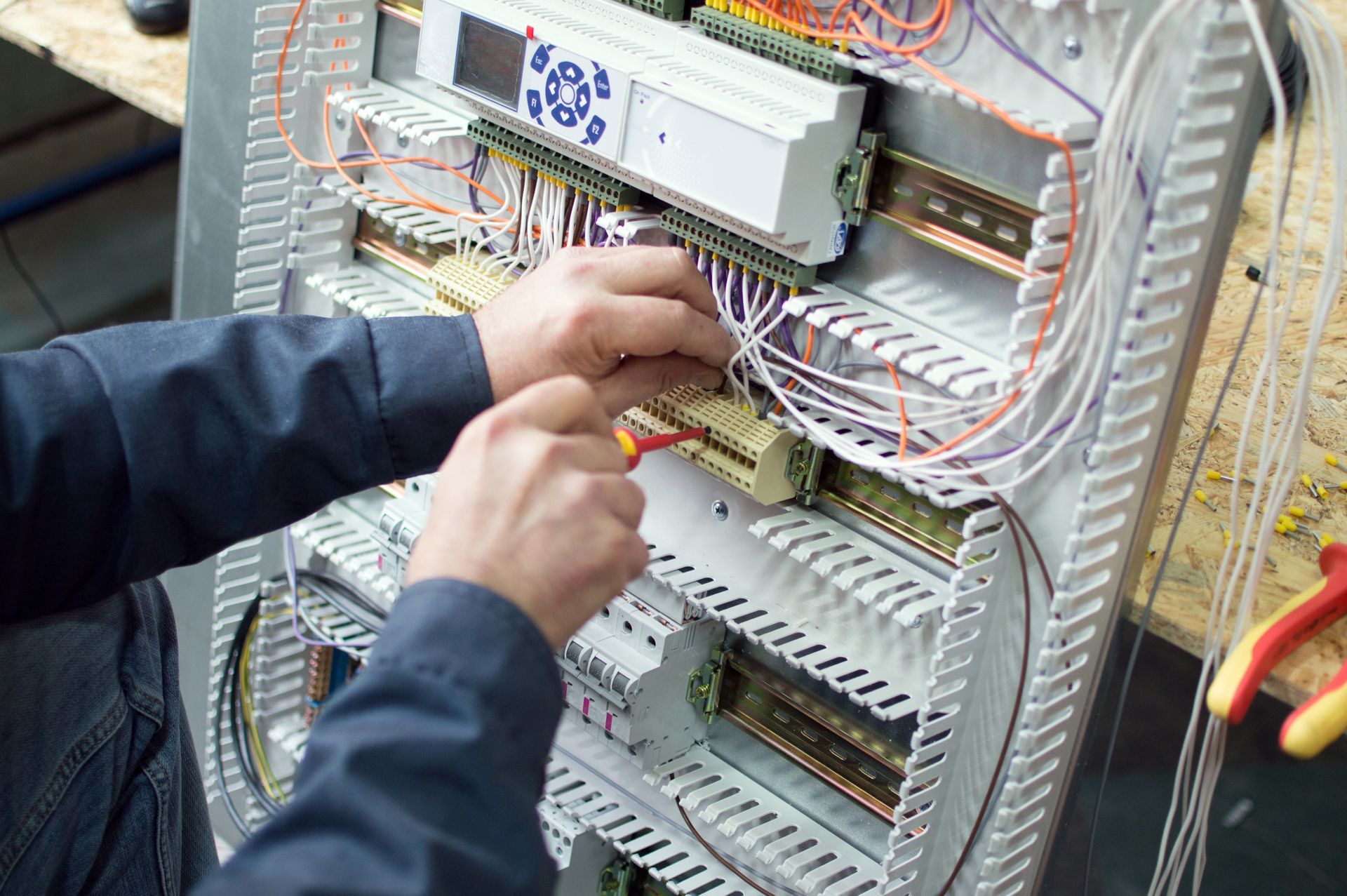
Low voltage wiring failures almost always occur at the termination point, not in the cable run itself. A Cat6 jack terminated without maintaining the twist ratio close to the termination point, or a sensor pair connected with mismatched polarity, degrades signal quality in ways that show up as intermittent disconnections or data errors rather than a clean failure that is easy to diagnose. JAK Electric terminates each connection to its appropriate standard and tests the completed run before the next segment is started, so problems are caught at the source rather than after walls are closed.
Once the installation is complete, data ports deliver consistent signal without the dead zones that occur when cable is kinked around a tight corner or run parallel to a power line for too long a stretch. Sensor connections register without floating or intermittent dropout, and the entire system is labeled so that any future expansion—additional data drops, added sensors, new automation zones—can be connected without pulling cable through the same walls again to trace what is already there.
With over 20 years in the electrical industry, including six to eight years managing low-voltage and structured cabling projects for a larger firm, JAK Electric now handles every installation personally. That means the person who assessed your wall construction and planned the route is also the person who runs the cable, makes the terminations, and hands you a labeled, tested system.
Answers About How the Work Is Done
The questions below focus on how low voltage wiring is actually installed—what decisions get made during the job, what standards apply, and what you can check once the work is finished.
How is the cable route determined in a home without existing conduit or pathways?
The route assessment looks for wall cavity access points, top and bottom plate locations, and any existing chase paths between floors, then identifies where drilling is required and at what angle to stay clear of framing members and high-voltage wiring already in the wall.
What is the difference between how Cat6 and sensor wiring are terminated?
Cat6 jacks are terminated to TIA-568 standards with the cable twist maintained as close to the connector as possible to preserve signal integrity at high frequencies, while sensor wiring uses twisted pair terminated with matched polarity at both ends to prevent signal interference between the send and return conductors.
Why does routing cable near high-voltage lines cause problems in low voltage systems?
Electromagnetic coupling from a power line running parallel to a low-voltage cable induces noise into the signal, which appears as interference, data errors, or false sensor triggers—keeping separation between circuit types is not optional in a properly installed system.
How do older Evansville homes affect the complexity of a low voltage installation?
Homes built before the 1980s typically have dense plaster walls, balloon framing with limited cavity access, and no pre-drilled top plates, all of which require slower, more deliberate routing to avoid surface damage and find workable paths between floors and rooms.
What does a completed low voltage installation include beyond the cable itself?
Each run includes a tested and labeled termination at both ends, cable secured at regular intervals to prevent sag or kinking, and documentation of what each run connects—so the system is maintainable and expandable without requiring the original installer to be present for every future change.
JAK Electric also installs low voltage wiring in Princeton, Newburgh, Henderson, Mount Vernon, and Boonville. To discuss your project's cable requirements and wall construction, call JAK Electric at (812) 647-1480 to arrange an on-site review.